The uncomfortable truth about fivem monetization in 2026: most servers are leaving 60–70% of their potential revenue on the table, and a loud minority are torching their communities chasing the rest. After watching hundreds of server stores across the network, the pattern is consistent — what converts is not what most owners build first, and the gap between a $200/month store and a $2,000/month store is almost entirely package design, not player count.
What players actually pay for
Ranked by conversion across typical RP servers, with rough share of store revenue:
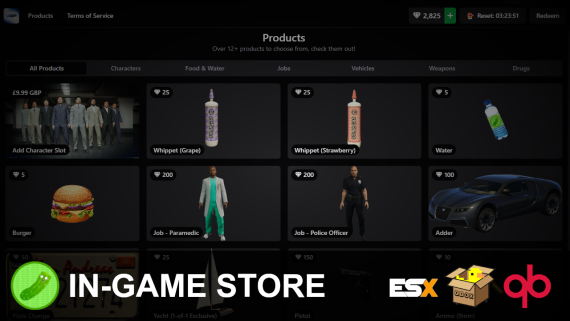
- Queue priority (30–45% of revenue): the undisputed king. It sells access to time, not power, so nobody resents it. Tier it: $5 bronze, $10 gold, $20 platinum monthly, with the top tier jumping the entire queue.
- Vehicle packs and exclusive cars (20–30%): players pay for identity on wheels. Store-exclusive (not gameplay-superior) vehicles convert best — same performance tier as earnable cars, distinct look. Stocking fresh ones quarterly from catalogs like cars-tebex.io keeps this category from going stale.
- Cosmetics and identity (10–20%): custom plates, clothing slots, phone numbers, housing decorations. Low individual price ($3–$8), high repeat purchase rate.
- Supporter tiers (10–15%): a monthly bundle of the above plus a Discord role and a thank-you. Crucially, these are your recurring revenue floor.
- Character/gameplay conveniences (under 10%, handle with care): extra character slots and garage space sell fine; anything touching money, weapons or skills starts the pay-to-win clock ticking.
Price anchoring and package design
The single highest-leverage change most stores can make costs nothing: add a premium anchor. A store selling $5 and $10 packages reads as a $10 store. Add a $50 “Founder” bundle — even if only 2% buy it — and the $20 package suddenly looks reasonable; mid-tier conversion typically rises 20–30% within a month. Other rules that hold up:
- Three tiers, not six. Choice paralysis is real; conversion drops measurably past four visible options.
- Name packages after fantasy, not contents. “Midnight Club Membership” outsells “Car Pack 3” with identical contents.
- Bundle at a visible discount. A bundle priced at 75% of its components’ sum moves more total revenue than the components alone — the deal structures running on buy-tebex.io are a good study in how discount framing drives basket size.
- End prices in 9 or 5 below $25; round numbers above. $19.99 works at the impulse tier; $50 reads more honest than $49.99 at the supporter tier.
Subscriptions vs one-time: the 2026 answer
Run both, but know their jobs. Subscriptions (queue priority, supporter tiers) are your predictable floor — a server holding 25–40 active subscribers can budget hosting and development a quarter ahead. One-time purchases (vehicles, cosmetics, bundles) are your spiky ceiling, driven by releases and events. The healthy ratio lands around 50/50 to 60/40 subscription-weighted. A store that is 90% one-time sales lives launch to launch; a store that is 90% subscriptions has stopped giving people new things to want. Event-driven drops — a heist weekend with a themed pack, the kind of content stocked at shop-tebex.io — are the reliable way to spike the one-time side without discounting your evergreen catalog.
Recommended FiveM scripts for your server



Seasonal offers without training discounts
Discount more than four times a year and players learn to never pay full price. Hold to: a winter sale, a server-anniversary sale, one summer event, and one wildcard. Between sales, create urgency with rotation instead of price cuts — limited-run vehicles that leave the store (owners keep them), seasonal cosmetics, numbered founder packages. Scarcity converts as well as discounting and protects your price integrity.
What kills trust kills fivem monetization
The fastest way to zero out a store is selling power: weapons, cash, faster XP, exclusive performance tiers on vehicles. The sequence is always identical — revenue spikes for six weeks, your grinders (the social core of the city) quit, retention slides, and three months later the whales leave too because the city they bought status in is empty. Adjacent trust-killers: changing what a package contains after people bought it, paid packages that bypass rules (“priority ban appeals”), and stealth-nerfing earnable content to push store alternatives. Sell time, identity and support. Never sell winning. Keeping your own store on a properly managed network storefront — the model that platforms like tebax.io are built around — also matters for trust: working receipts, instant delivery and clean chargeback handling are conversion features, not back-office details.
Upgrade your server — shop our FiveM scripts




Realistic numbers per 100 active players
Benchmarks from healthy (non-pay-to-win) servers: expect 8–15% of monthly active players to ever spend, an average revenue per paying player of $12–$25/month, which nets out to roughly $150–$375 per month per 100 actives — call it $250 as a planning midpoint. A 300-active server doing $750–$1,100/month is performing well; one doing $3,000 is either exceptional at events and identity content or quietly selling power. Budget against the midpoint, not the dream, and reinvest the first margin into content cadence — because every benchmark above degrades fast on a server with nothing new to want.
Monetization in 2026 is a design discipline, not a cash grab. Anchor your prices, weight toward subscriptions, rotate instead of discount, and treat the line between convenience and power as the most expensive line you can cross. The stores that respect it are still collecting in year three; the ones that don’t rarely see year one’s anniversary sale.
Free Scripts on Tebex